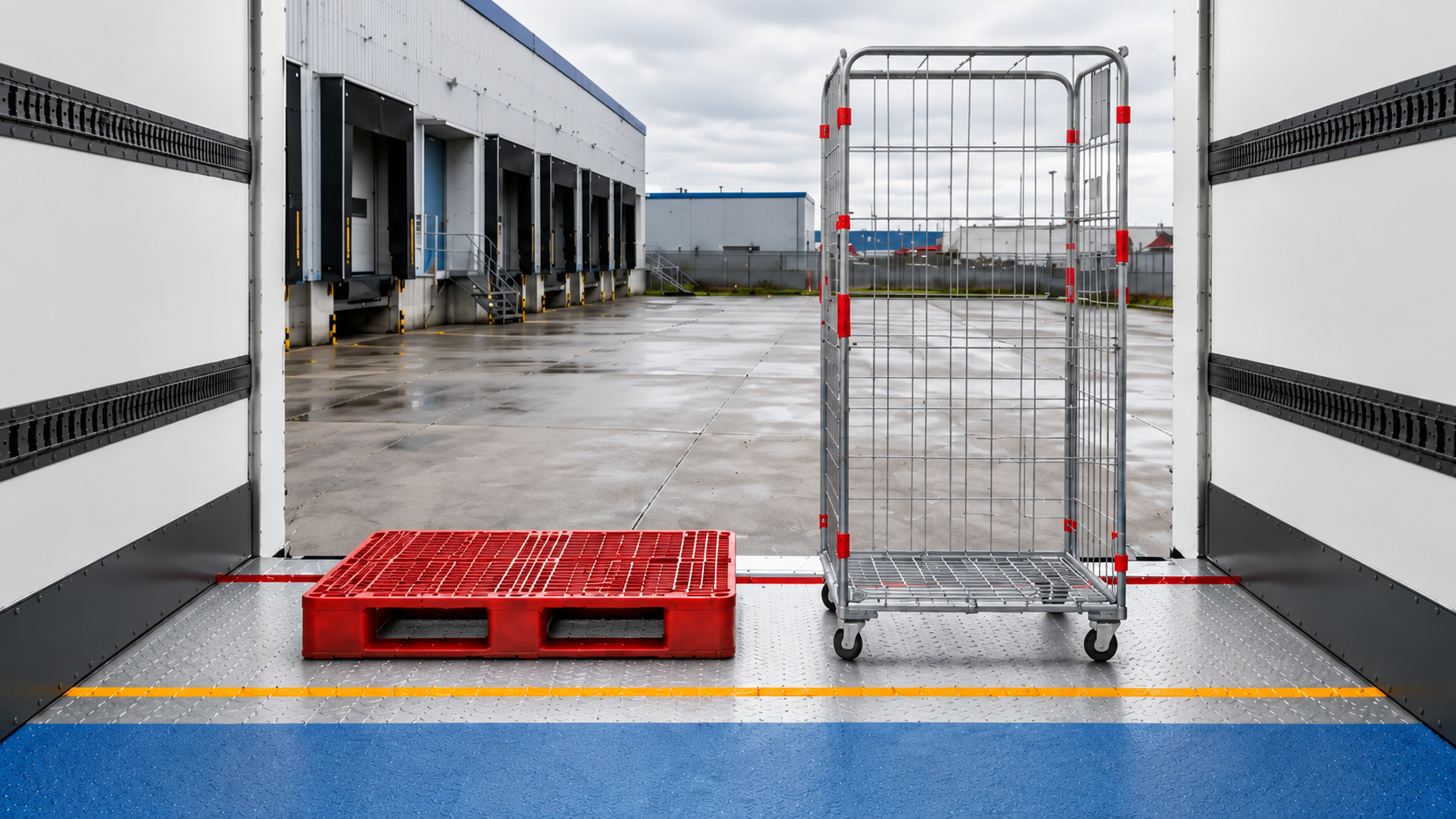
Stop Line is a founder-led vehicle safety business developing a fixed visual threshold system for the moment a pallet or roll cage hides the rear edge of a commercial vehicle.
15+Years of HGV experience
24UK registered designs
2Clear visual decisions
OPERATOR VIEW / LAST-METRE CONTROL Amber prepares Red stops
OUR ORIGIN
A hidden edge should not become a hidden risk.
Founder Majid Ali developed the concept after more than 15 years of professional HGV driving and first-hand experience of the pressure, restricted sight lines and changing conditions found in everyday loading work.
When the load blocks the operator’s view, the remaining distance to the rear can become an estimate at precisely the moment accuracy matters most. Stop Line turns that invisible final approach into two clear visual decisions.
The concept is intended for commercial vehicles handling pallets, roll cages and other wheeled loads. It gives operators a consistent reference even when different depots, vehicle bodies, lighting levels and floor finishes make the final approach feel different from one job to the next.
Our goal is practical: support safer judgement without adding a screen, power supply or another instruction that competes for attention. The visual boundary remains in the working environment, where the operator needs it.
The system is being developed around operational reality, disciplined testing and responsible fleet adoption. Product performance will be described only to the level supported by verified evidence.
01
UNDERSTAND THE LOADING TASK
Informed by Operators
Start with how people actually move pallets and roll cages, including restricted views, awkward postures and time pressure at the rear threshold.
Observe representative loading tasks and ask operators where the rear-edge reference disappears.
Record approach speed, stopping choices, handling corrections and feedback on the proposed visual cues.
Review Output
A documented loading scenario and practical checks to include in the trial.
02
MATCH THE VEHICLE AND DUTY
Specified for Each Vehicle
Review the floor, body layout, loading equipment and tail-lift arrangement together before setting the insert specification and line positions.
Confirm panel dimensions, channel fit, insert retention and a flush transition for the selected floor.
Assess visibility beside the load and access for routine inspection and wiping the EPDM and seating area clean and dry.
Review Output
A vehicle-specific proposal with positioning, maintenance and installation details to validate.
03
MEASURE BEFORE EXPANDING
Measured Through Trials
Use a controlled trial to examine the proposed system under representative conditions, with a recorded baseline and agreed acceptance limits.
Check line recognition, operator response, insert condition, slip behaviour, wear and cleaning requirements.
Record limitations and compare the findings before deciding to refine, stop or extend the configuration.
Review Output
A written recommendation grounded in measured findings, with remaining uncertainties clearly stated.
One Review. Vehicle, Task and Operator.
Our proposed review brings the operating environment, vehicle and people together. HSE workplace transport guidance provides context for observing tasks, consulting workers and reviewing risks when work or equipment changes.
Find the complaint contact, information to prepare, response aims and further review routes for communications, trials, products or personal information.
If there is an immediate safety risk, make the situation safe first and follow your operator’s incident procedure.
For vehicle trials, engineering, partnerships, suppliers or general enquiries, the contact page brings the specialist inboxes and direct contact details together.
Share a concise outline first. Confidential drawings and detailed documents can follow through an agreed route.